
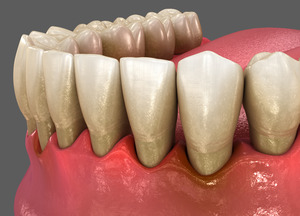
Untreated gum disease can ultimately lead to gum recession, which is when the gum tissue pulls away from the teeth. Not only can this lead to sensitivity, but it also leaves the tooth roots more susceptible to decay. Some people think that if they simply wait long enough, their gums will eventually grow back on their own. But is this actually the case? Or do other steps need to be taken to address gum recession?
What Causes Gum Recession?
Gum recession is often a side effect of poor oral hygiene. When bacteria are allowed to build up in your mouth, they can lead to gum disease, which is an infection of the gum tissue. As gum disease persists, harmful bacteria can cause the gums and underlying bone to deteriorate. Over time, the damage to the tissue can result in noticeable gum recession.
There are other possible causes of gum recession. For example, if you brush your teeth too hard, it can wear away your gum tissue. On top of that, frequent grinding and clenching of your teeth can put excessive pressure on your gums, leading to significant damage over time.
Can the Gums Grow Back After They Recede?
Unfortunately, unlike your skin, gum tissue is unable to naturally regenerate. Consequently, if your gums have receded, you cannot expect them to simply grow back on their own. Fortunately, there are certain steps you can take to prevent gum recession from getting worse and even reverse the damage that has already been done.
How Can Gum Recession Be Treated?
If you have gum recession, your periodontist may recommend gum grafting. This is when new tissue is transplanted to the area where recession has occurred, thereby covering the exposed tooth roots. The grafted tissue may come from a different part of your mouth, but it can also come from a donor.
Obviously, it’s also important to address the underlying issue that led to your gum recession in the first place. For instance, if you have gum disease, you might benefit from a deep cleaning procedure that consists of scaling and root planing. Scaling involves getting rid of the plaque and tartar contributing to gum disease; meanwhile, root planing involves smoothing out the tooth roots to protect them from future bacterial buildup.
In short, gum recession is not an issue that will resolve itself, but that doesn’t mean you can’t do anything about it. If you talk to your periodontist, they can walk you through your options for addressing your receding gum tissue and getting your oral health back on track.
About the Author
Dr. David Handsman is a well-respected member of the periodontal community. He studied periodontology at the University of Tennessee, and he has been named a Diplomate of the American Board of Periodontology. At Handsman & Haddad Periodontics in Worcester, his wide menu of periodontal services includes gum disease treatment, gum grafting, and more. If you’re looking for a solution for your gum recession, you can schedule an appointment with Dr. Handsman by visiting his website or calling (508) 753-5444.
