
All-ON-4® – Worcester, MA
Creating Functional, Stable, and Longer-Lasting Smiles
When it comes to replacing an entire arch of teeth, you may decide that traditional dentures are not for you. Instead, you prefer a more stable solution – dental implants. Unfortunately, if your jawbone does not have enough support to withstand the pressure of an implant and its custom restoration, this can disqualify you from this type of restorative dentistry. What might seem hopeless is actually not at all thanks to Handsman & Haddad Periodontics, P.C. Using All-On-4® in Worcester, our team of dentists can restore your smile more quickly and without any necessary pre-implant dental work (i.e. bone graft or sinus lift). To find out how you can enjoy a longer-lasting smile, contact our office today to schedule an appointment.
How All-On-4® Implants Work

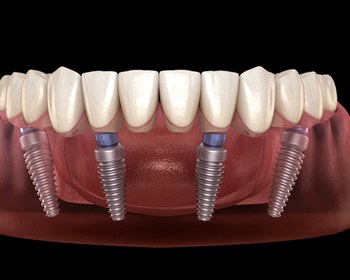
Even if your jawbone density is not up to par, Dr. Handsman and Dr. Jenny can use All-On-4® to give you the results you desire. While traditional implants require between 6 and 8 posts, All-On-4® uses only 4 titanium posts to hold up your custom denture. The way this works is we will first examine your oral cavity to determine the densest areas of your jawbone. After formulating a personalized treatment and surgical plan, we will make a few small incisions in your gums and place two implants toward the front of your mouth at an angle. This will ensure the greatest level of support when the restoration is placed.
Then, we will place two implants toward the back of your mouth to ensure proper stability and balance. Immediately following the implant placement, we will provide you with a temporary denture to wear while your permanent one is being created. This will allow you to see a completed smile the same day you arrived for your surgery.
How to Know if You’re Eligible for All-On-4® Implants
Although a strong jawbone isn’t necessary for All-On-4®, good oral and overall health are. The reason is if you have a compromised immune system or are suffering from gum disease, these can compromise your implant placement, causing them to ultimately fail. Your implants must be able to properly fuse to the bone and surrounding tissue, so if you smoke, have diabetes, or an autoimmune disorder, this can severely hinder your ability to heal properly.
If you have periodontal disease (gum disease), you will need to receive treatment prior to your implant placement. This is because gum disease can cause tooth and bone loss, so if an implant is surgically placed and months later, your gum disease worsens, there is a greater chance of your implant(s) loosening or falling out.
Benefits of All-On-4® Implants

The most obvious benefit of All-On-4® is its ability to give patients full, complete smiles without the necessity of a strong, durable jawbone, but you’d be surprised how many other benefits this unique restorative surgery offers:
All-On-4® vs. Traditional Dental Implants

Dental implants of any kind offer a multitude of benefits that no other tooth replacement solution can provide; however, when comparing All-On-4® to traditional implants, you might find that the former offers:
All-On-4® FAQs
Why I am unable to receive my permanent prosthetic the same day my implants are placed?
There are two reasons for this:
What if I only need All-On-4® on my top or bottom arch?
If you only need All-On-4® treatment for one arch, that is perfectly fine. You are not required to have the surgery performed on both the top and bottom; however, many patients do find that if they are likely to require the same type of treatment later on, it is often best to do it at the same time. Not only will this save you money in the long run, but it will lend itself to better results.
Can I expect my smile to look natural?
Absolutely! One of the greatest benefits to All-On-4® implants is that they look and feel like regular teeth. By taking your facial features and structure into consideration, your new restorations will blend in beautifully to create an improved and enhanced aesthetic. Dental lab technicians will receive specific detailed instructions regarding the color, size, and shape of your dentures, making sure they are crafted with the utmost care and consideration.
How successful are All-On-4® implants once they’ve been placed?
Much like regular dental implants, All-On-4® has an extremely high success rate. Most studies report a 98.2% success rate when placed on the lower row of teeth and a 97-98% success rate when placed on the top row of teeth. When choosing All-On-4® implants, you can feel confident that you will have a smile that is not only durable and reliable but also long-lasting.
Who is Not a Candidate for All-on-4® Dental Implants?
Generally speaking, All-on-4® is not recommended for patients with certain systemic health problems, such as uncontrolled diabetes. These types of issues can interfere with the healing process and increase the chances of your dental implants failing. Furthermore, it is not recommended that you have All-on-4® surgery performed while you are pregnant; this is because hormonal changes can leave the mouth more susceptible to gum disease, which can lead to complications with your implant posts.
Our team can perform a thorough review of your oral and overall health in order to confirm whether you’re truly a viable candidate for All-on-4®. If you’re currently dealing with any health issues that you think might impact your ability to get dental implants, don’t hesitate to let us know.
Is All-on-4® Painful?
The All-on-4® procedure is actually more comfortable than many people expect. Before the surgery begins, your mouth will be numbed with a local anesthetic. This will help keep pain to a minimum during the treatment. At most, you may feel some amount of pressure while your mouth is being worked on.
In the days following All-on-4®, you may experience soreness and swelling. These symptoms should peak within the first 48 to 72 hours; after that, they will gradually fade away on their own. There are several steps you can follow to stay as comfortable as possible during the initial recovery period, such as taking an over-the-counter pain reliever or holding a cold compress over any swollen areas for 15 minutes at a time. If your discomfort lasts longer than expected, please let our team know right away.
Can I Eat Normally with All-on-4® Dental Implants?
Yes, once your mouth has fully recovered from your All-on-4® surgery, you will be able to enjoy all kinds of foods without issue. The implant posts offer enough chewing power and stability to allow you to eat virtually anything you want, which can go a long way toward helping you maintain a varied, healthy diet.
That being said, when you first get your implant posts, you’ll be instructed to only eat soft and liquid foods for a while. This is to help minimize pressure on your gums and jawbone while your mouth is healing.
How Do I Care for All-on-4® Dental Implants?
Taking care of All-on-4® dental implants is easier than many patients realize. Because the replacement teeth are permanently anchored in place, they can be brushed and flossed as if they were natural teeth. Make sure you’re as thorough as possible while brushing; you’ll want to pay close attention to the area where your prosthesis meets the gums. Also, you may want to consider rinsing with antibacterial mouthwash in order to minimize the chances of a gum infection that could put your dental implants at risk.
